Behind the front lines of Defqon Wars. Systems, units, experiments, failures and everything currently
being built.
07 Oct 2026 · 15:55
FIRST BATTLEFIELD — MAP DEVELOPMENT HAS BEGUN
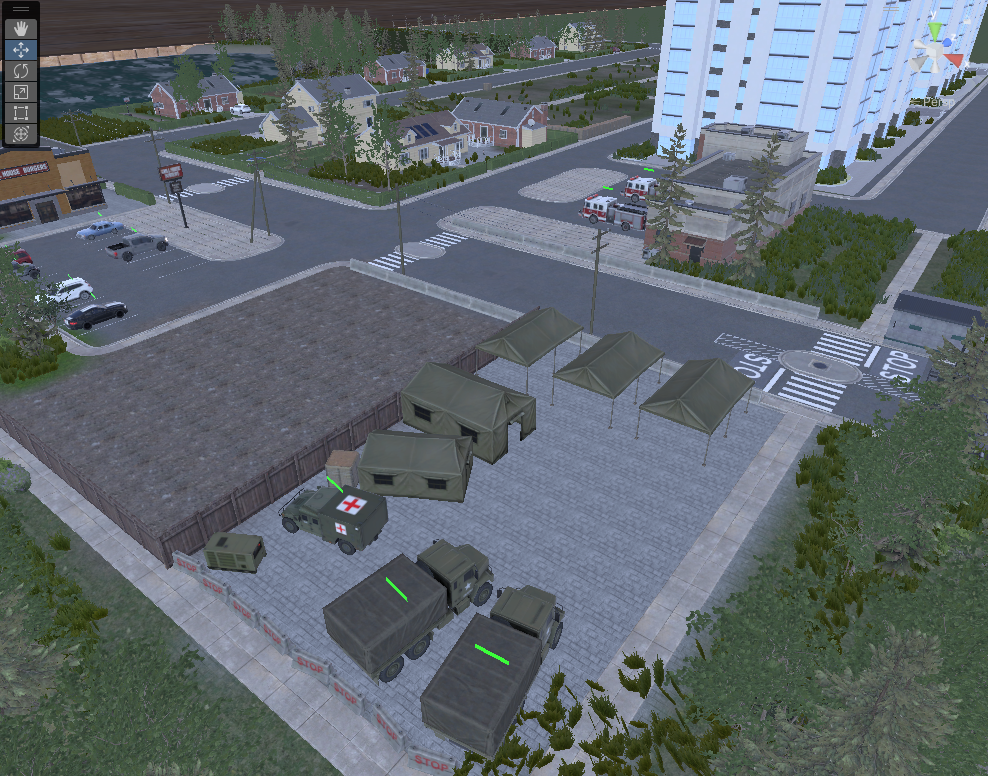
Development has officially started on the first proper map for Defqon Wars.
Until now, most development has focused on getting the underlying game systems working: units, buildings, combat, resources, logistics and everything else required to actually make an RTS function.
Now those systems finally need somewhere to fight.
The first map is currently being built and will serve as an important testing ground for base expansion, resource gathering, logistics, unit movement and large-scale combat.
Resource fields, roads, terrain and strategic locations all need to be positioned in a way that makes expanding your base a decision rather than simply “build everything over there.”
It will also be the first real opportunity to see how the different systems interact when they're no longer sitting conveniently next to each other on a development map.
Because driving a Supply Truck across a test area is easy.
Keeping the little bastard alive while it carries the resources your entire war machine depends on is another matter.
The map is still heavily WIP and will change considerably as development continues.
But for the first time, Defqon Wars isn't just getting armies.
It's getting a battlefield.
WIP / EARLY DEV
Town is getting shape for the first map.
07 Oct 2026 · 15:37
EARLY DEV STAGES — WHERE DEFQON WARS BEGAN
Before the current EDF units, detailed buildings, resource chains, logistics systems and increasingly ridiculous amounts of military hardware, there was...
Well...
This.
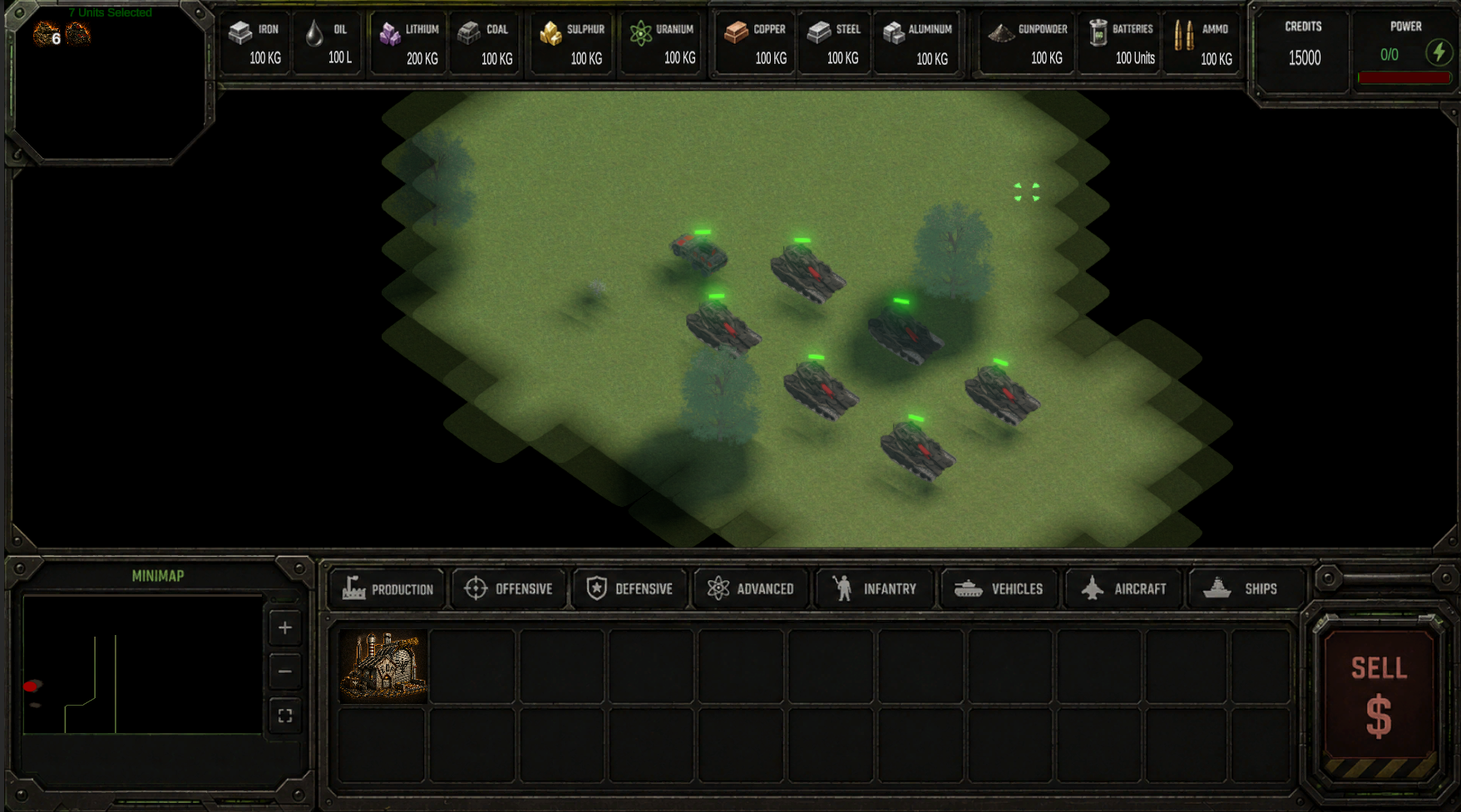
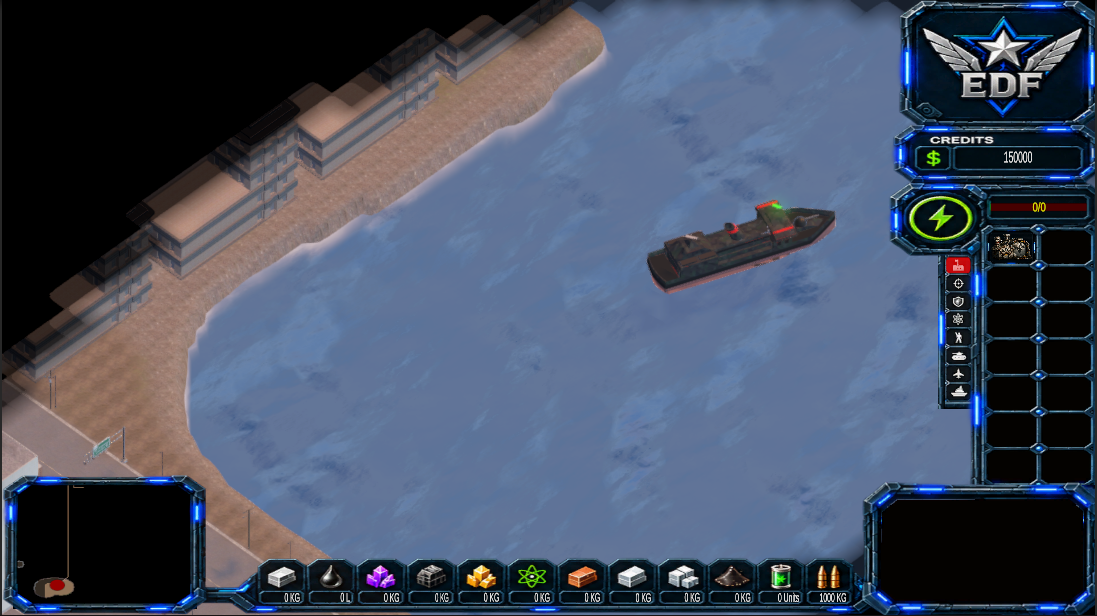
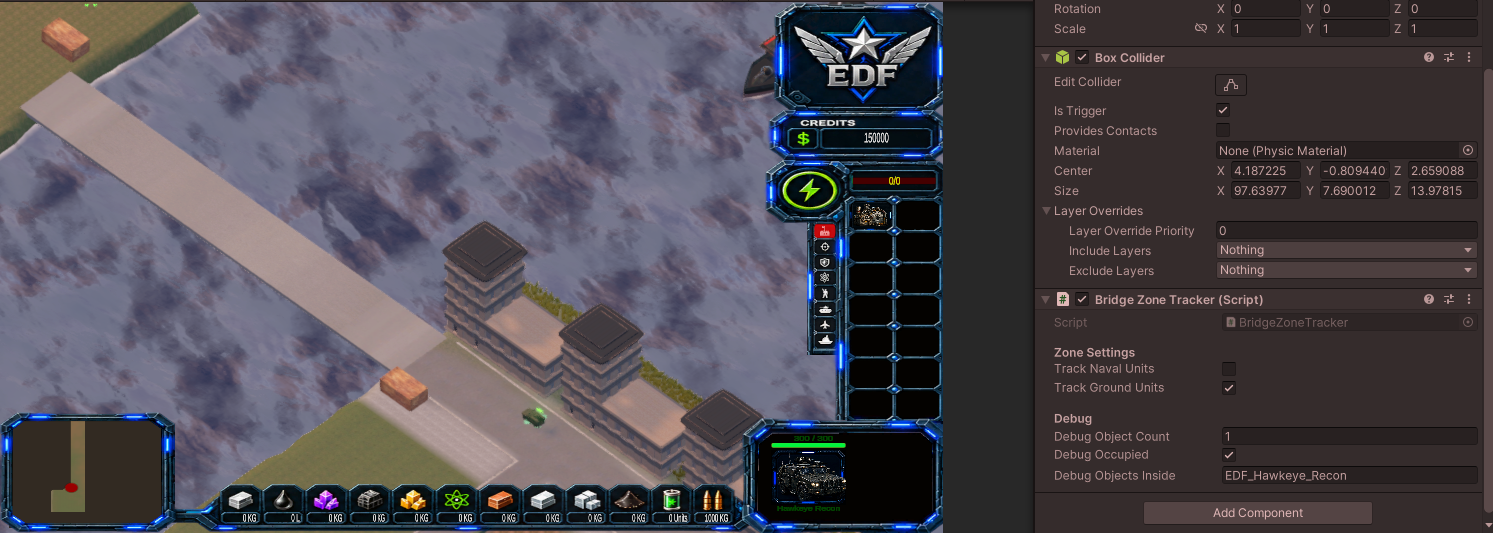
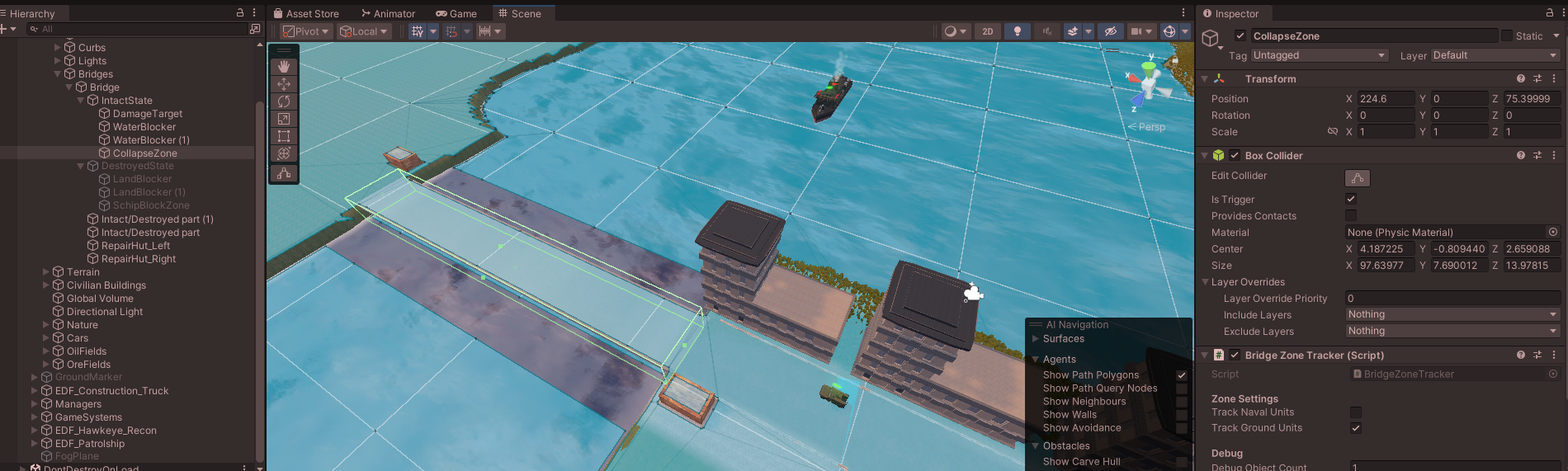
These screenshots come from the early development stages of Defqon Wars, when the main objective wasn't making everything look good.
The objective was making everything work.
And sometimes even that was negotiable.
WELCOME TO EARLY DEVELOPMENT!!!
At this point, Defqon Wars was basically a giant collection of experiments held together by C#, Unity and unreasonable optimism.
Models were simple.
Textures were basic.
Animations were limited.
UI elements were constantly changing.
Entire systems could disappear, return three days later and somehow be completely different.
Nothing shown here should be considered representative of what Defqon Wars looks like today.
Seriously.
Put the pitchfork down.
GAMEPLAY BEFORE GRAPHICS
The focus during these stages was on building the foundations of an RTS.
Could units be selected?
Could they move?
Could they navigate around buildings?
Could they attack?
Could buildings be placed?
Could factories produce units?
Could Harvesters collect resources?
Could resources actually be stored and spent?
Could things explode?
That last one was obviously extremely important.
Every ugly placeholder had a purpose.
A crude tank wasn't really a tank yet.
It was a test platform for movement, pathfinding, targeting, weapons, health and damage.
A basic building wasn't there to win architectural awards.
It existed to test construction, placement, power, production, rally points, selling and repair systems.
The graphics could come later.
First I needed an actual game underneath them.
THE AGE OF QUESTIONABLE ENGINEERING
Early development also meant discovering all the wonderfully stupid ways an RTS can break.
Vehicles doing things vehicles definitely shouldn't do.
Units deciding that the shortest route to their destination involved absolutely anything except the road in front of them.
Buildings having collision problems.
UI elements fighting for control of the mouse.
Resources occasionally behaving like accounting had been outsourced to organized crime.
And, naturally, fixing one problem occasionally created three entirely new ones.
Game development.
Where “IT WORKS!” is immediately followed by:
“Why the fuck does THAT happen now?”
PLACEHOLDERS EVERYWHERE
A lot of what you see in these early screenshots was never intended to survive.
Models existed because something needed a physical representation while its underlying systems were being developed.
Some were temporary.
Some were redesigned.
Some were completely replaced.
And some probably survived significantly longer than they had any right to.
That's the beauty of placeholders.
You create something with the intention of using it for two days...
...and three months later you're emotionally attached to TestTank_Final_FINAL_v2.
FINDING THE EDF
These stages were also where the visual identity of the Earth Defence Force began taking shape.
Instead of immediately giving the EDF pristine futuristic military hardware, the faction gradually developed a more grounded early-game identity.
Repurposed equipment.
Converted civilian machinery.
Rebuilt vehicles.
Whatever humanity can get operational and send into battle.
Later EDF technology becomes increasingly specialized and purpose-built, but that rough industrial beginning became part of the faction's character.
What originally started partly because I needed simple models to develop the game eventually helped define what the EDF actually is.
Funny how that happens.
AND THEN EVERYTHING STARTED CHANGING
As the underlying systems became more capable, the visuals started catching up.
Temporary models could be replaced.
Buildings became more detailed.
Vehicles developed recognizable roles.
The EDF started getting a consistent visual identity.
Resource gathering became an actual logistics system.
Factories became specialized.
Power became important.
Storage became important.
Supply vehicles became important.
And suddenly the little RTS experiment was becoming something considerably larger.
THIS IS NOT THE CURRENT GAME
That part deserves repeating.
Defqon Wars no longer looks like this.
These screenshots aren't here to showcase the current graphics.
They're here because this is part of the game's history.
Eventually I want to be able to look back through these devlogs and see the entire journey — including the ugly bits, broken bits and the occasional “what the hell was I thinking?” bits.
Because that's development.
You don't start with the finished game.
You start with an idea, some cubes, questionable code and far too much confidence.
Then you keep building.
And building.
And breaking things.
And rebuilding them.
Until one day you look at the old screenshots and realize:
Holy shit... we've come a long way. 😎
Want to see more of these behind the scenes images?
WIP / EARLY DEV
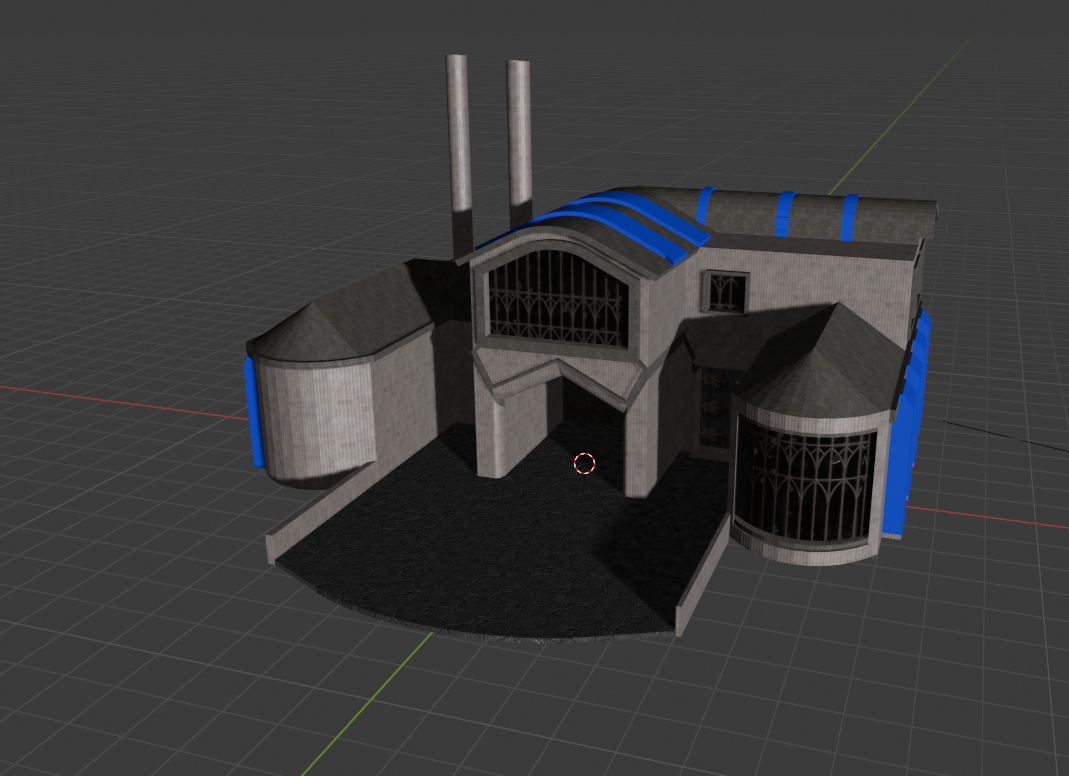
Gold refinery under development
WIP / EARLY DEV
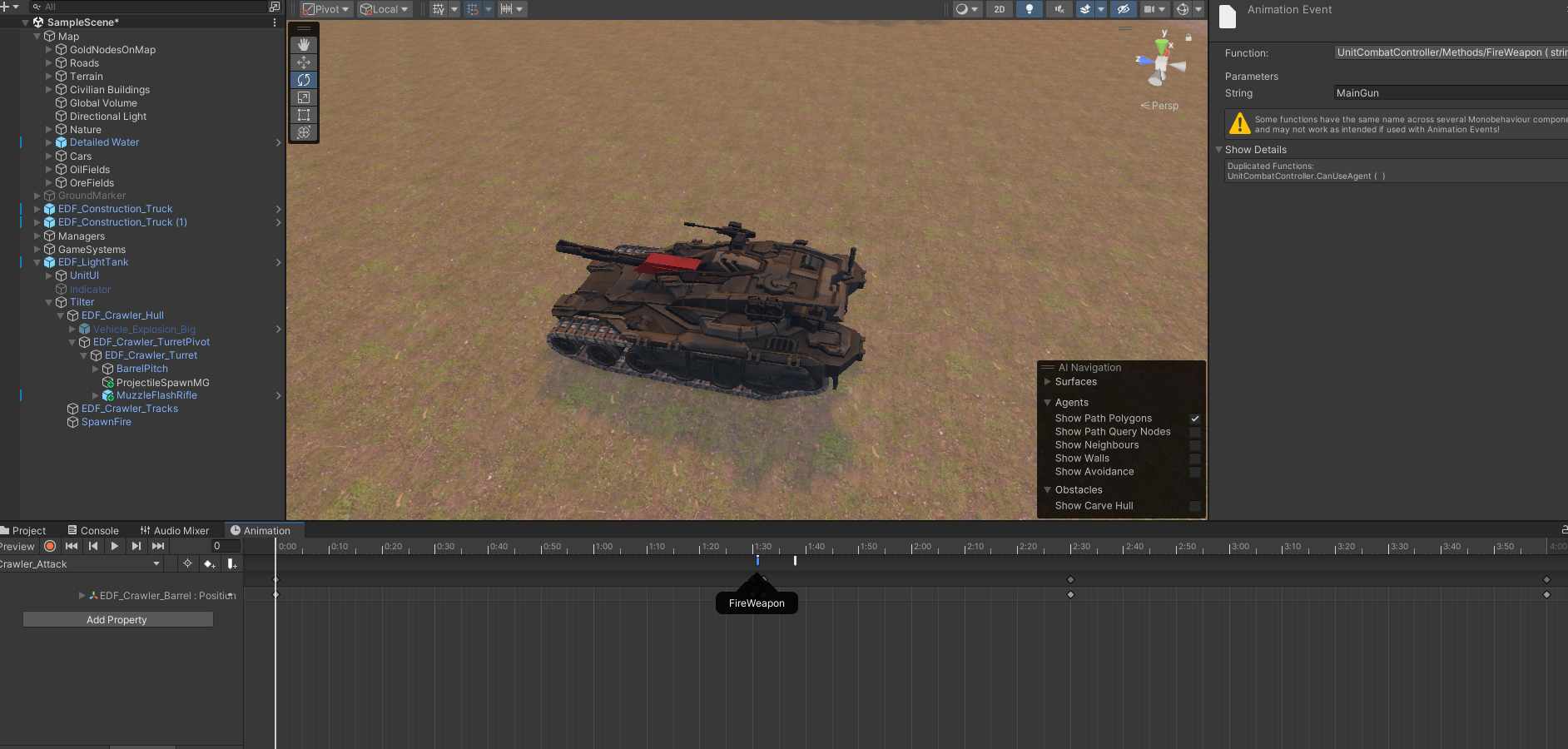
Testing the crawler
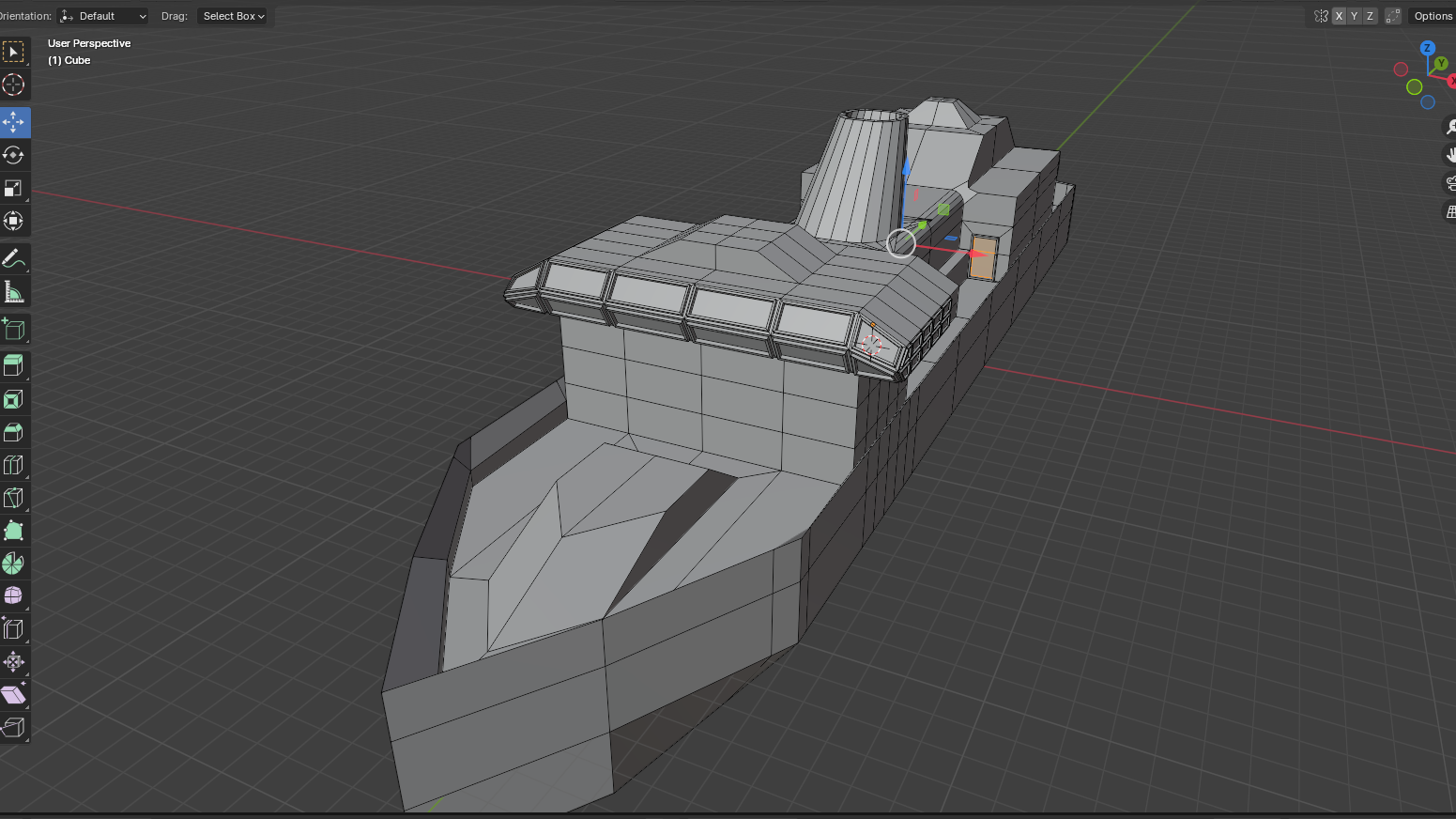
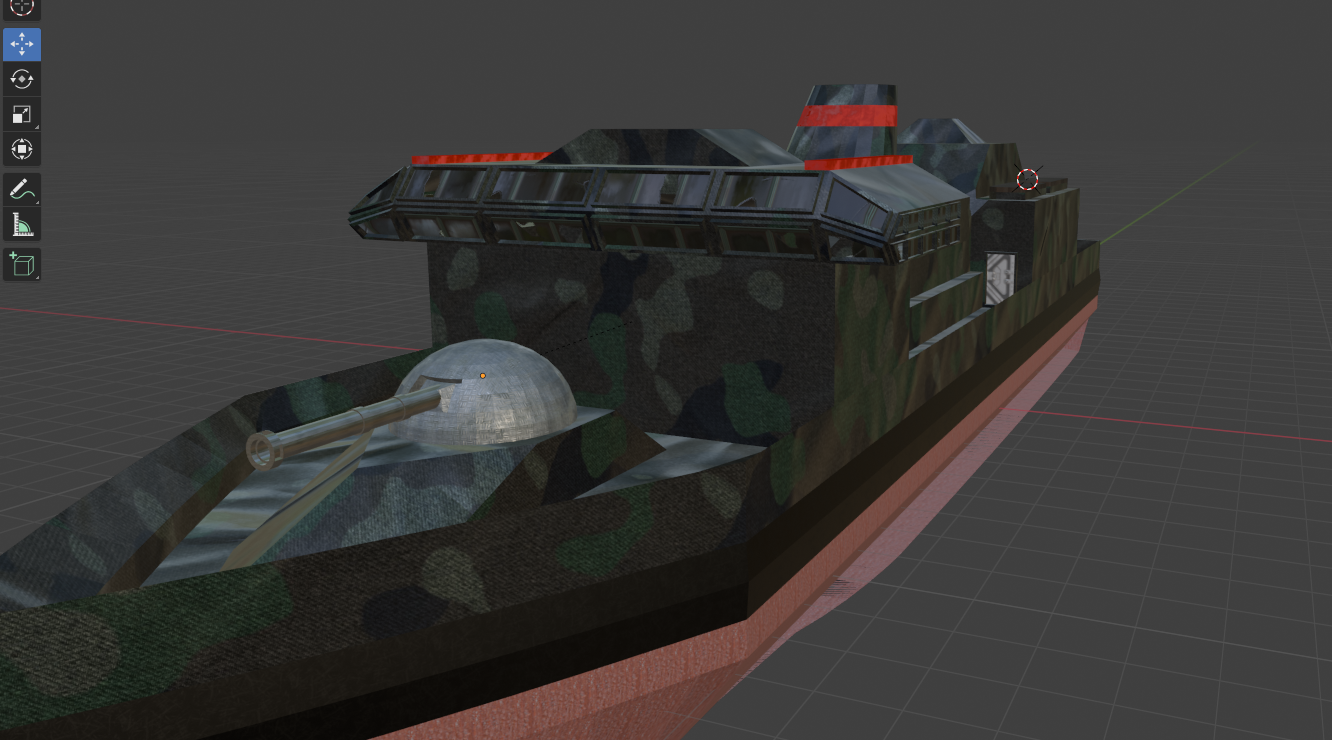
Modelling the EDF Patrol Ship
Modelling the EDF Patrol Ship
Testing the Patrol Ship
Building the bridge mechanics.
Building the bridge mechanics.
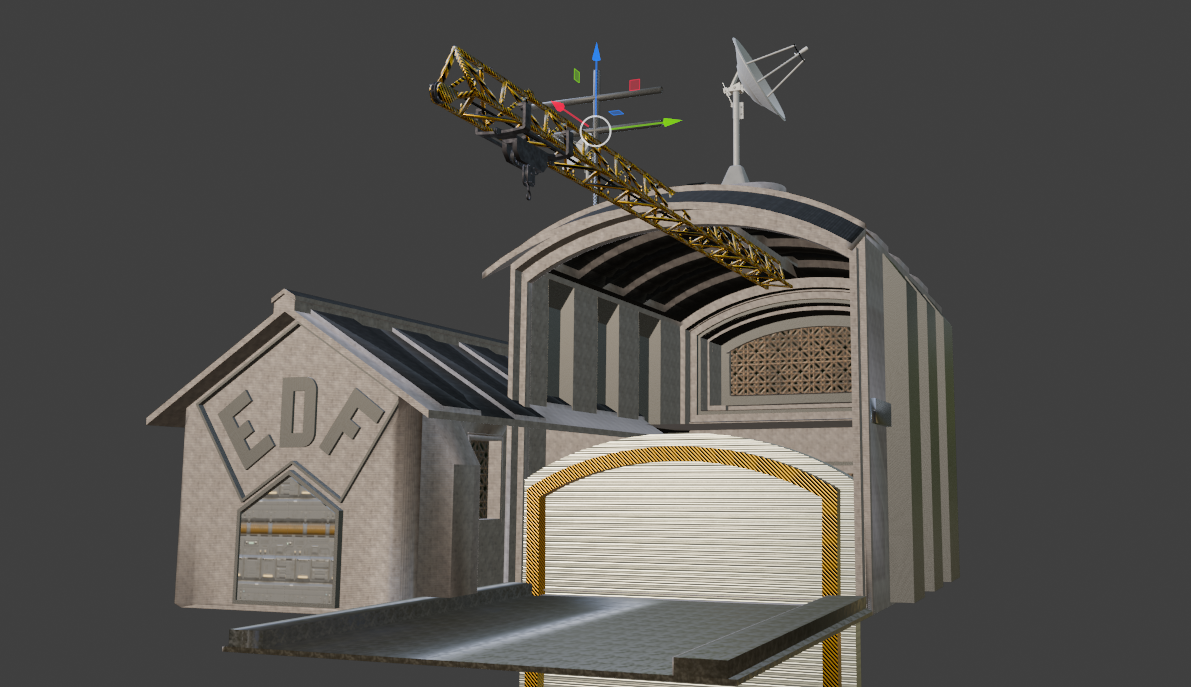
Modelling the EDF HQ
Animating Crawler Elements
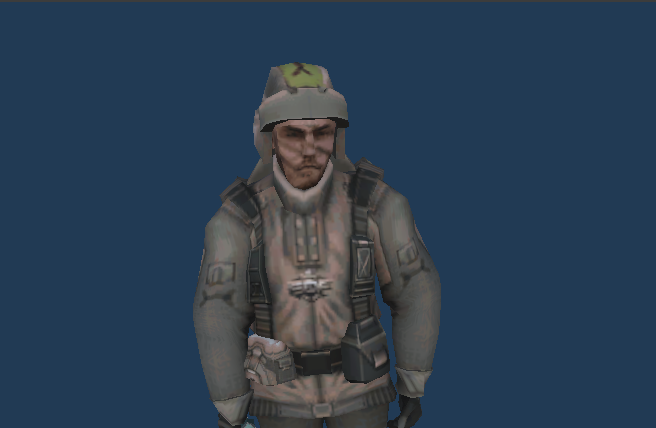
Just finished the Engineer
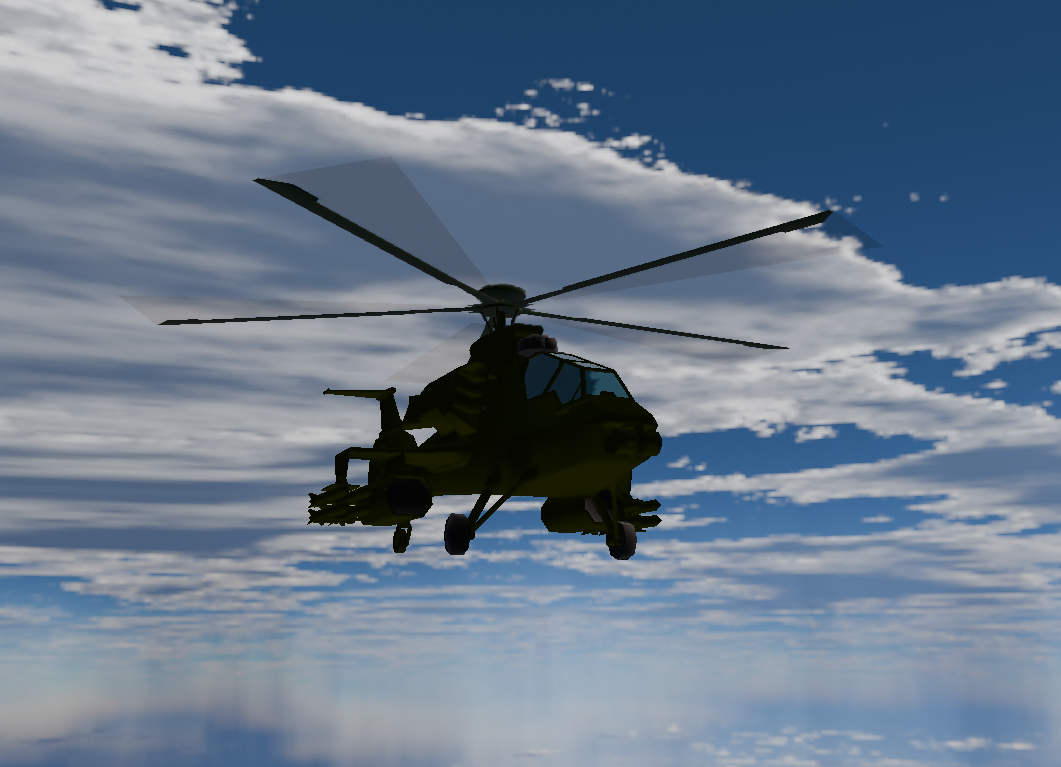
Testing the early Strider Helicopter model
07 Oct 2026 · 15:29
EDF ARSENAL REPORT — CURRENT UNITS & STRUCTURES
The Earth Defence Force has come a long way from a couple of units driving around an empty test map.
The EDF now has working infantry, vehicles, aircraft, naval units, logistics, resource production, power generation and defensive structures. There is still a long way to go, but the faction is finally starting to feel like an actual army.
Admittedly, an army held together by recycled equipment, questionable engineering decisions and soldiers who probably should have read the recruitment form more carefully.
INFANTRY
- Grunt — Basic infantry. Cheap, armed and exceptionally qualified at being cannon fodder. Someone has to walk toward the machine guns first.
- Engineer — Simple field engineers equipped with automatic pistols. They can repair damaged bridges and keep important infrastructure operational. Giving the people responsible for structural integrity automatic weapons seemed perfectly reasonable.
- AT Soldier — Anti-tank infantry. Carries the appropriate equipment for explaining to armored vehicles that their warranty has expired.
AIR UNITS
- Strider Recon Helicopter — A fast reconnaissance helicopter built from recycled downed helicopters. Apparently the EDF looked at several crashed aircraft and thought: we can make one good one out of these.
VEHICLES
- Hawkeye — A fast reconnaissance vehicle armed with an autocannon and machine gun. Quick and dangerous, but lightly protected. The crews also appear to have unusually weak bladders. EDF Engineering has declined to investigate.
- Armadillo — A fast, slightly tougher reconnaissance APC capable of carrying four infantry. Armed with a machine gun and perfectly respectable for its role. Unfortunately, our Drill Sergeant cannot pronounce Armadillo and regularly calls it a dildo. Command has stopped correcting him.
- Crawler — A medium battle tank. Slow, bulky and feared for good reason. Armed with a main cannon and secondary machine gun. It won't arrive quickly, but neither will whatever it shoots at.
- Harvester — A small dozer-like vehicle used to collect gold ore. Essentially a bulldozer with an economics degree.
- Supply Truck — The bloodstream of EDF production. These trucks move the resources required by factories and keep the supply chain alive. Protect them at all costs. Tanks are considerably less impressive when the factory cannot build any.
- Oil Truck — Transports crude oil from Oil Derricks to Oil Silos. Highly important, highly flammable and therefore naturally sent through active war zones.
- Ore Truck — Transports raw ore from the various mining operations to Warehouses for storage and further processing. Not glamorous, but neither is losing a war because somebody forgot the copper.
NAVAL UNITS
- EDF Patrol Ship — A civilian ferry converted into an armed patrol vessel with an autocannon and anti-air missiles. Because apparently retirement cruise wasn't one of the available conversion options.
CURRENT EDF BUILDINGS
The EDF economy is becoming just as important as its military.
Resources aren't simply magical numbers appearing in the commander's bank account. Raw materials have to be extracted, transported, stored and eventually processed into something useful.
Which means there are now considerably more ways for the enemy to ruin your afternoon.
PRODUCTION & RESOURCE BUILDINGS
- HQ — The heart of an EDF base. Prepares resources and deploys construction trucks used to expand the base. If this disappears, you probably have bigger problems than the construction queue.
- Barracks — Trains Grunts, Engineers and other infantry. Takes ordinary dumbasses and turns them into professionally equipped dumbasses.
- Gold Refinery — Processes gold ore delivered by Harvesters into hard-earned cash. War may be hell, but apparently it still requires accounting.
- Light Vehicle Factory — Produces Supply Trucks, Ore Trucks, Oil Trucks and the EDF's lighter reconnaissance vehicles.
- Medium Vehicle Factory — Produces medium-class combat vehicles such as the Crawler. Bigger factory, bigger vehicles, bigger repair bill.
- Helipad — Produces EDF helicopters. Preferably ones that remain helicopters this time.
- Iron Ore Mine — Extracts iron ore and must be constructed on suitable ore-field terrain.
- Lithium Ore Mine — Extracts lithium. Yes, the Lithium Mine mines lithium. Our scientists spent weeks naming this one.
- Copper Ore Mine — Extracts copper from ore fields for later processing and manufacturing.
- Sulphur Ore Mine — Extracts sulphur. Eventually useful for making things that explode, because apparently we weren't already producing enough of those.
- Oil Derrick — Pumps crude oil from oil fields for collection by Oil Trucks.
POWER
- Steam Turbine — Small-scale power generation for early EDF bases. Primitive, reliable and significantly less concerning than the nuclear option.
- Medium Power Plant — Provides considerably more power as the base and production network expands.
- Nuclear Power Plant — Large-scale power generation for advanced EDF bases. Produces lots of electricity and gives the enemy a very obvious building to shoot at.
DEFENSIVE STRUCTURES
- Pillbox — Basic defensive position for keeping unwanted visitors outside the base.
- Autocannon Turret — Automated heavy defense for situations where asking the enemy to leave politely has failed.
ADVANCED & LOGISTICS
- Communications Center — Advanced communications infrastructure supporting the growing EDF war machine.
- Warehouse — Stores raw resources awaiting further processing. Storage capacity is limited, and destroying the Warehouse means losing the resources still inside it. Turns out putting several tons of strategically important material in one building has disadvantages.
- Oil Silo — Stores crude oil awaiting further processing. Like the Warehouse, it has limited capacity and loses its contents when destroyed. Large container full of oil located inside a military base. Nothing could possibly go wrong.
PLANNED EDF BUILDINGS
The EDF construction menu isn't finished either.
Currently planned are:
- Ammo Factory — Requires Copper and Gunpowder.
- Coal Kiln — Deploys tree harvesters to gather wood and turn it into coal. Environmental approval is presumably still pending.
- Battery Factory — Requires Copper and Lithium.
- Gunpowder Factory — Requires Sulphur and Coal.
- Shipyard — Production facility for EDF naval forces.
- Airfield — Production and support facility for fixed-wing aircraft.
- Heavy Vehicle Factory — Because apparently the Crawler wasn't chunky enough.
- More Defensive Structures — Because eventually two turrets stop being reassuring.
PLANNED EDF UNITS
And then there's everything still waiting to join the battlefield.
Infantry
- Combat Engineer — Repairs vehicles, buildings and bridges.
- Sniper — Long-range infantry elimination.
- AA Soldier — Infantry equipped with anti-air missiles.
- Commando — Specialized elite infantry.
- Machine Gunner — Because sometimes the solution is simply more bullets.
- Combat Medic — Heals wounded infantry and desperately tries to undo everyone else's decisions.
- Mortar Team — Indirect-fire infantry support for enemies who thought hiding behind something would help.
Vehicles
- Light Tank
- Artillery
- HIMARS / MLRS
- IFV
- Heavy Tank
- AA Vehicle
- Secret Prototype Vehicle — Classified. Probably safe. Almost certainly tested properly... i guess
Aircraft
- Attack Helicopter
- Transport Helicopter
- Fighter Jet
- Fighter/Bomber
- Bomber
- Advanced Unit — That's all you're getting for now.
Ships
- Gunboat
- Missile Cruiser — Long-range land attack combined with anti-air capability.
- Destroyer — Specialized anti-submarine warfare vessel.
- Heavy Cruiser — A battleship-like heavyweight designed to bring considerably more gun than diplomacy.
- Transport Vessel — Moves units and equipment across the water, hopefully without converting itself into a submarine.
And that's where the Earth Defence Force currently stands.
Some units are operational. Some systems are still being refined. A considerable amount of the planned arsenal still needs to be built, modeled, coded, balanced, broken, fixed, broken again and eventually declared working as intended.
The important part is that the EDF is no longer just a collection of prototypes.
It's becoming a complete faction with its own economy, logistics network, resource chains, production infrastructure and combined land, air and naval forces.
And perhaps the slightly worrying part?
This is just the EDF.
There are still two other factions to build.
I may have made a terrible mistake. 😭